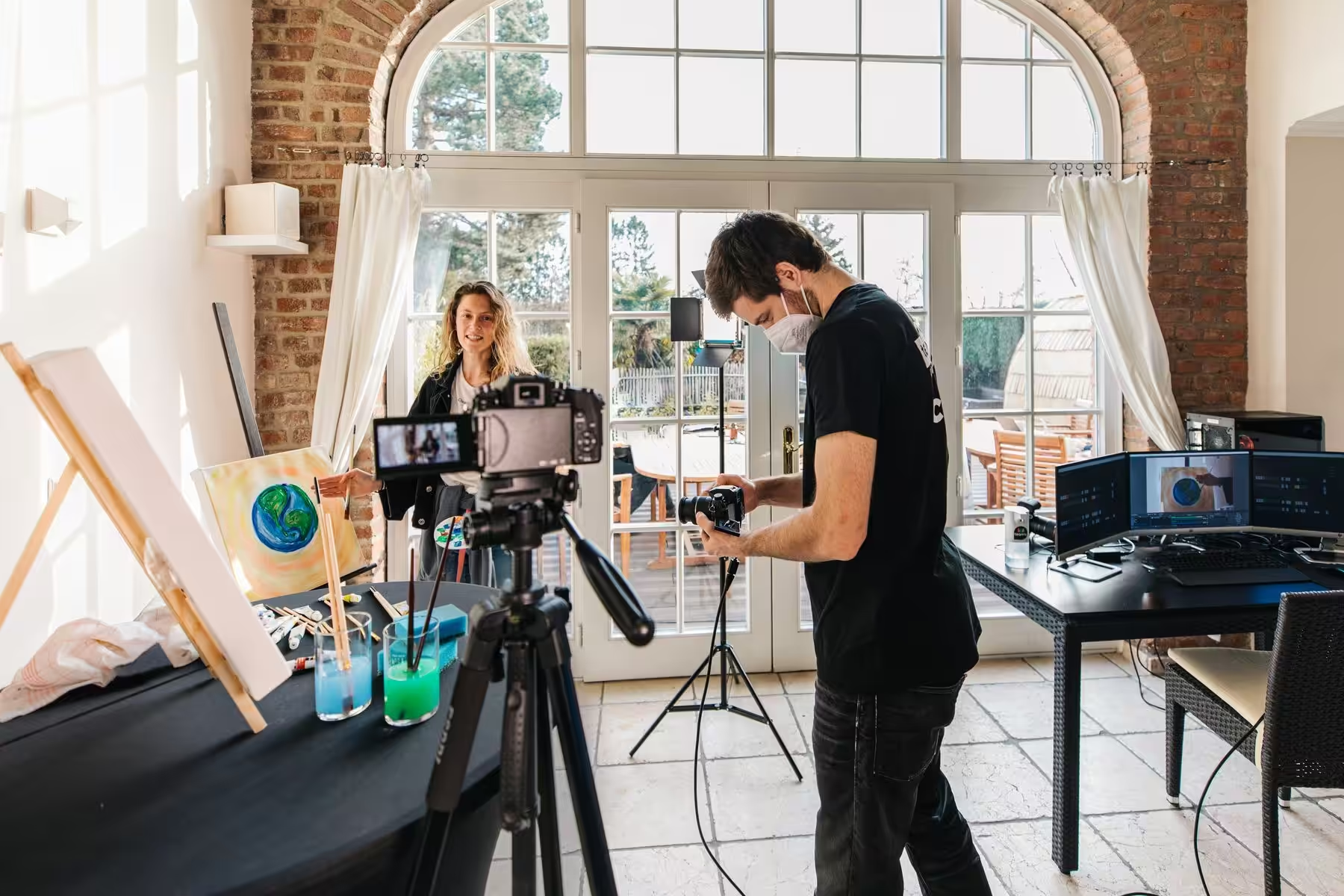

Getting budget approval can be a rather thankless part of event planning. You’ve come up with the perfect idea for the summer party or the next company outing, but at the crucial meeting, management inevitably asks: “How much will this cost?”—and, even more importantly: “What’s in it for us?”
Precise budget planning for corporate events is absolutely essential, especially for 2026. In this guide, you’ll learn not only how to calculate your event budget, but also how to confidently justify the investment based on reliable market data.
The Psychology of Budgeting: Why We Almost Always Get Our Numbers Wrong
Before we enter the first number into the table, it’s worth taking a look at a fundamental psychological issue. Why do we systematically underestimate costs? Nobel laureates Daniel Kahneman and Amos Tversky identified this phenomenon as the “planning fallacy.”
It refers to the human tendency to systematically underestimate the time and cost required for future tasks, even when we already have experience with them. We instinctively assume the “best-case scenario.” For your planning, this means: Never budget too tightly. Always include a contingency budget of at least 10–15%. Unforeseen variables such as weather fluctuations or last-minute price changes are the rule, not the exception, in the event industry.
The major cost categories: Where the money really goes
The following breakdown is based on current market data for business events. A reliable data source for this is the Global Meetings and Events Forecast by Amex GBT, which provides a detailed analysis of annual trends in event spending.
When calculating the costs for your next team event, you should generally break them down into several categories. While every individual aspect is important, they should each be weighted differently.
1. Location & Facilities (approx. 20–30%)
The current forecast clearly shows that the scarcity of attractive locations is one of the biggest hurdles, which is driving prices consistently higher. Companies are increasingly investing in the “onsite experience” to justify employees’ physical commutes in the age of remote work. While rent is merely the foundation, ancillary costs should not be overlooked. Keep an eye on:
- Cleaning fees
- Energy charges (often listed separately)
- Furniture (does this include tables, chairs, etc.?)
2. Catering (approx. 30–40%)
This is almost always the largest single item. The official figures from the DEHOGA Federal Association help explain why this category carries such significant weight: rising labor costs and the return to the full VAT rate have led to significantly higher prices than five years ago. The following tips can help with your calculations:
- Be proactive when it comes to catering: Make sure to budget for a sufficiently generous beverage allowance.
- Ask about the costs for service personnel (these are often billed by the hour or based on the amount of work involved, rather than as a flat rate).
3. Program & Team Building (approx. 20–30%)
That’s the part that sticks in people’s minds. So think of this budget line as an investment in employee retention. The latest Gallup Engagement Index shows that low employee engagement costs the German economy billions every year. A budget for high-quality event formats is therefore a direct countermeasure to internal turnover. There are various options available for this:
- A fun quiz show —the perfect way to spend the evening after dinner together.
- A foosball-building event that offers the perfect blend of teamwork and competition.
4. Technology & Logistics (approx. 10%)
According to industry reports from the VPLT (Association for Media and Event Technology), labor costs for skilled workers have risen in this sector as well. Be sure to budget a solid 10% for lighting, sound, and any necessary bus transfers to avoid technical glitches. Nothing looks more unprofessional than a CEO speaking into a faulty microphone.
The Hidden Cost Drivers
GEMA: As soon as music starts playing, GEMA becomes an unavoidable factor. These fees can be calculated in a legally compliant manner using the official fee schedule.
KSK: The contribution for freelance artists (DJs, live bands, etc.) is set by law. The current contribution rate can be viewed directly on the Artists' Social Security Fund website.
Beware of the “DIY trap”: Our experience from hundreds of events shows that the internal labor costs of employees who organize events “on the side” often exceed the fee charged by a professional—while also compromising quality and leaving you without recourse. So leave the decorations and technical setup to the experts.
Save on taxes: The 110-euro limit
In Germany, the tax treatment of company events is clearly defined by law, which gives you some leeway.
- Up to 110 euros gross per person is tax-free as a deduction. Only amounts above this limit are subject to tax.
- This is explicitly provided for in the Income Tax Act (Section 19(1), first sentence, item 1a of the EStG).
Take advantage of this allowance for up to two events per year to boost team morale without unnecessarily increasing your tax burden.
Focus on ROI rather than "costs"
When presenting the budget to management, don’t talk about “expenses”—talk about “investments.” The Stepstone Recruiting Reportclearly confirms that corporate culture and the resulting sense of belonging are now key factors for talent when choosing an employer. Those who cut corners here will end up paying double later on when conducting a costly recruitment drive.
Points to consider for your meeting:
- “This event isn’t just a company party; it’s a measure designed to reduce employee turnover.”
- “We are strengthening cross-departmental communication, which will speed up projects in Q2.”
Conclusion: Good planning creates freedom
If you plan your budget for the corporate event realistically, build in a buffer, and understand the tax implications, you’ll sleep better and negotiate with greater confidence. Don’t rely on estimates. Use 2026 to professionalize your event planning. Your nerves (and your boss) will thank you for it.
Want to check your budget?
Do you have a budget in mind but aren't sure what you can realistically achieve with it in 2026? We'll help you get the most out of it for your team and steer clear of financial pitfalls.