
Sustainability has long since become a key priority in the events industry. Employees are seeking meaningful work, customers expect accountability, and regulatory requirements such as the CSRD (Corporate Sustainability Reporting Directive) are placing increasing obligations on companies. Yet for many HR managers and event planners, the topic feels like an impenetrable jungle of certifications, restrictions, and complexity.
There is a great deal of fear of being accused of “greenwashing,” and just as much uncertainty: Does every company outing now have to take place in the woods, and can we never serve meat again?
The short answer: No. The long answer: A green event isn’t about making sacrifices; it’s a mark of quality. In this guide, we explain what the term means, why sustainable events are often even more budget-friendly, and provide you with a concrete green event checklist to get you started right away.
Definition: What makes an event a “green event”?
The term is not legally protected, which is why it is all the more important to follow established standards. The Federal Ministry for the Environment, Nature Conservation, Nuclear Safety, and Consumer Protection (BMUV) defines sustainable events as those that “take ecological, social, and economic aspects into account in all phases of planning, implementation, and follow-up.”
So it’s about much more than just doing away with plastic cups. A truly green event balances three essential pillars:
Ecology: Minimizing resource consumption and emissions (carbon footprint).
Economy: Supporting regional economic growth and long-term cost efficiency.
Social Issues: Fair working conditions, inclusion, and accessibility.
Why is this relevant right now? Starting in 2025/2026, significantly more companies will be required to report on sustainability. Events will be included in these reports. You can read more about the legal background in our in-depth article: Corporate Social Responsibility (CSR) Becomes Mandatory – What This Means for Events.
The 5 Key Areas of Action: Where You Have the Greatest Impact
If you’re planning a sustainable event, you don’t have to get everything perfect right away. The Federal Environment Agency (UBA) and industry analyses show that certain areas carry significantly more weight than others. That’s where we’re focusing our efforts.
1. Mobility: The elephant in the room
For almost every event, travel to and from the venue accounts for the largest share of CO2 emissions—often as much as 70%.
The strategy: Choose a venue that is easily accessible by public transportation. Offer Deutsche Bahn event tickets or organize shared shuttles instead of having attendees drive individually.
The result: Traveling together by bus serves as the first team-building activity and dramatically reduces the environmental footprint.
2. Location & Energy
Is the event taking place in an energy-efficient building? Does the venue use green electricity?
The strategy: Specifically ask about environmental certifications (e.g., Green Key, EMAS). In the summer, outdoor venues are ideal because they require less artificial lighting and air conditioning. Also consider the accommodation. Short distances between the hotel and the event venue save time and reduce emissions.
3. Catering: Local beats international
Catering is the most emotionally charged aspect and a major factor in achieving carbon-neutral events. A WWF study clearly demonstrates that, on average, a meat-based meal generates significantly more greenhouse gases than a vegetarian alternative.
The strategy: Focus on “local and seasonal” ingredients. Strawberries in December have to be flown in, which unnecessarily drives up costs. Change the default: Flip the standard. Make vegetarian meals the norm, and meat or fish the option that must be actively chosen. This drastically reduces meat consumption without imposing bans.
4. Procurement & Waste
The mountains of trash left behind after festivals or trade shows are legendary. A green event aims for “zero waste.”
The strategy: Make reusable items a priority. Say goodbye to goodie bags filled with cheap plastic merchandise that nobody needs. Digital first: Invitations, programs, and feedback forms often work better in digital format and save on paper and printing costs.
5. Social Responsibility
An often-overlooked point. Who sewed the T-shirts? Are the service staff paid fairly? Is the venue accessible to all employees?
The strategy: Work with service providers who ensure transparency in their supply chains and adhere to social standards.
You can find more information about the criteria in our basic statement: Green Event Statement.
Your Green Event Checklist to Get Started
To make sure you don't have to start from scratch the next time you plan, use this concise checklist to get started:
Planning & Communication
[ ] Has the sustainability goal been defined and communicated to the team?
[ ] Are invitations and information sent digitally?
[ ] Are unnecessary gadgets and flyers being avoided?
Mobility & Location
[ ] Is the venue easily accessible by bus or train?
[ ] Are carpools or shuttles being organized?
[ ] Does the venue use green energy / conserve resources?
[ ] Is accessibility ensured?
Catering
[ ] Are the foods locally sourced and in season?
[ ] Is tap water (in pitchers) offered instead of bottled water?
[ ] Is the menu sufficiently vegetarian/vegan?
[ ] Are leftovers donated or repurposed (e.g., through partnerships with "Too Good To Go")?
[ ] Do you use reusable tableware?
A common fallacy: “All or nothing.”
Our experience shows that perfectionism is the enemy of progress. Don’t try to force a 100% carbon-neutral event on your first attempt. Start with the biggest factors (transportation and catering).
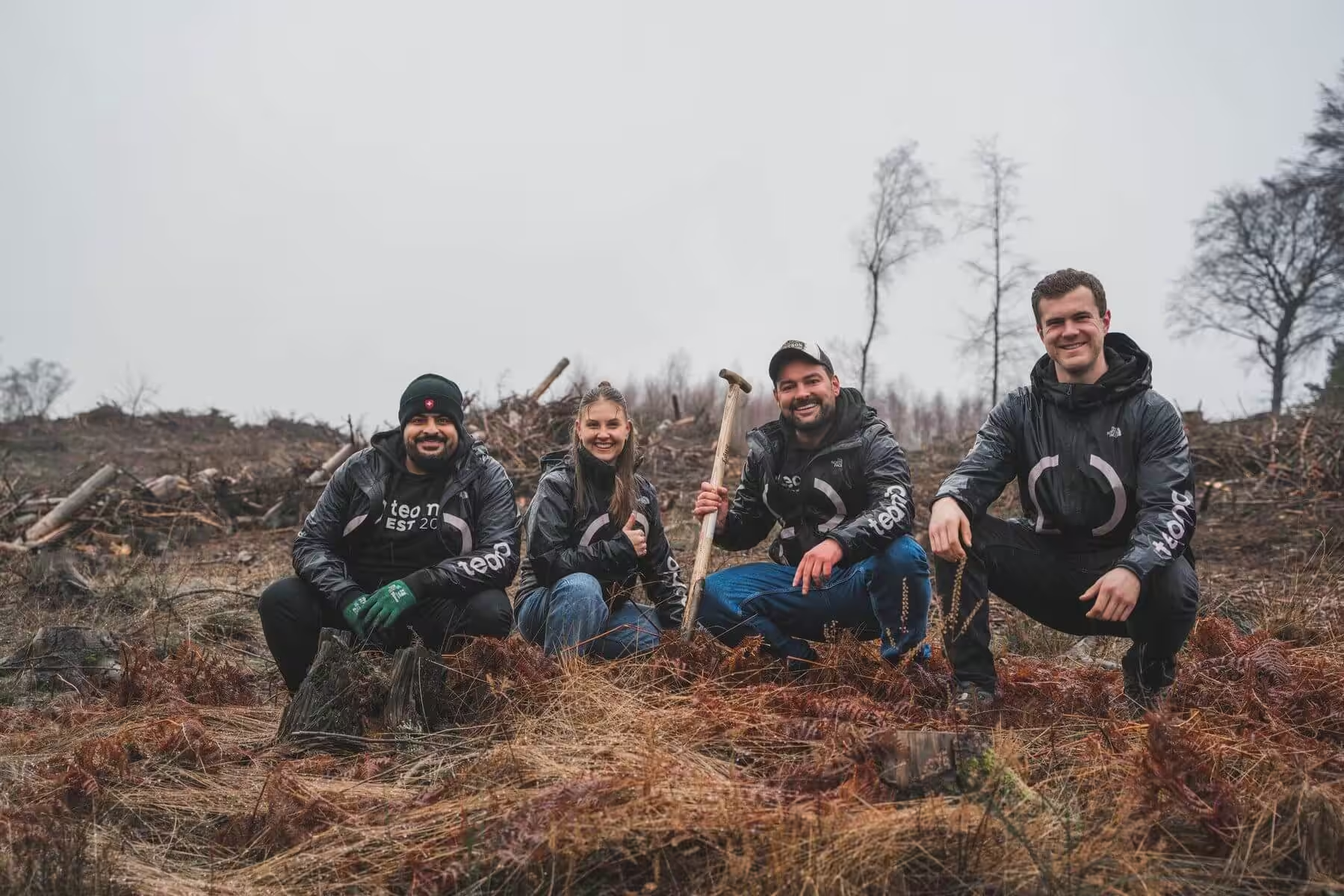
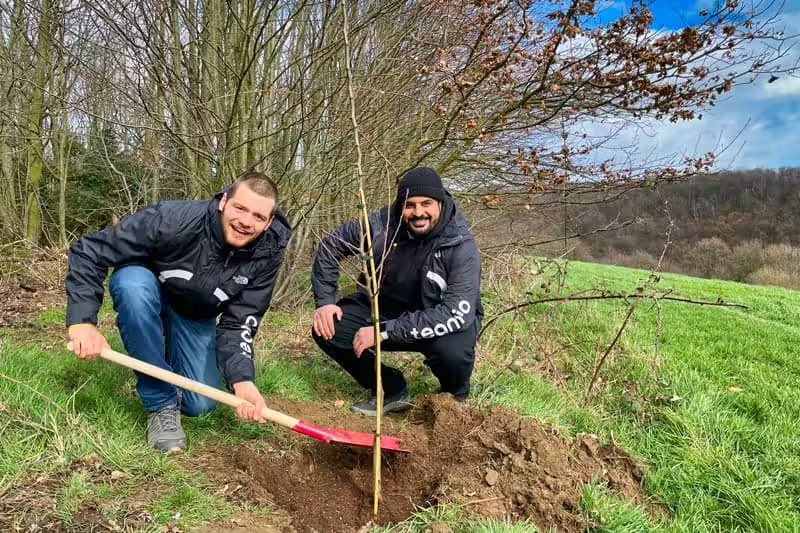
For emissions that can’t (yet) be avoided, offsetting is a valid approach. At teamio, for example, we use tree-planting projects to offset the carbon footprint of our events. Be honest in your communication: “We’re not perfect yet, but we’re on the right track.” This builds more credibility than a green logo with no substance.
Conclusion: Sustainability is a process, not a state
Organizing a green event doesn’t mean sacrificing fun or the quality of the experience. On the contrary: mindful enjoyment, traveling together, and a location surrounded by nature often strengthen the sense of community. Plus, you send a strong message to your staff: We take responsibility.
Don't let the complexity overwhelm you. Use our Green Event Checklist, start small, and build on your success from one event to the next.
Want to celebrate in an eco-friendly way without the hassle? Are you looking for a team-building event that combines sustainability and fun without having to wade through a sea of certifications? Whether it’s raft-building with sustainable materials or CSR events in the forest—we’ve got the right ideas. Feel free to contact us today!