Experience-oriented learning
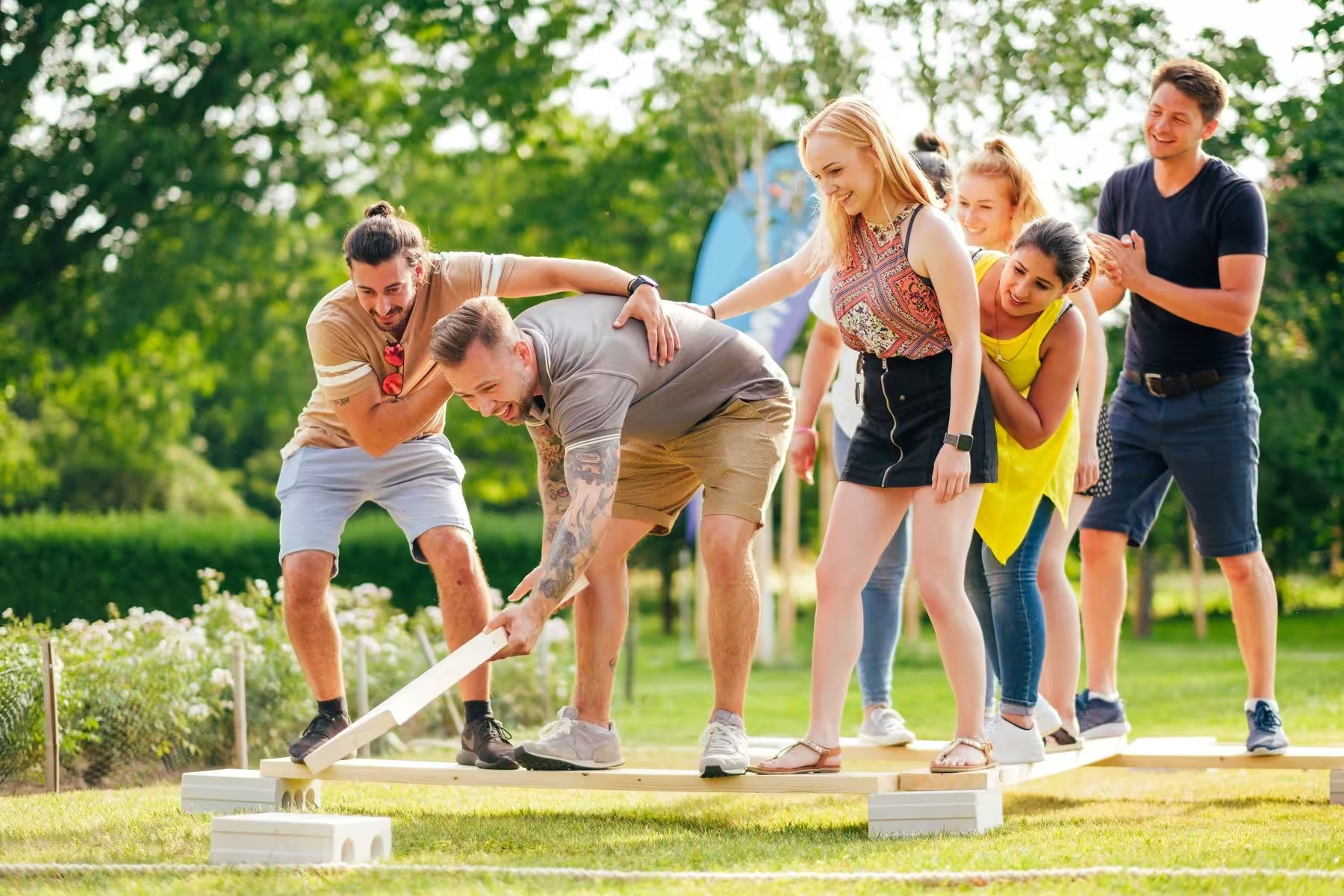
Current findings in neurodidactics and brain research make it clear that words alone are actually only a limited medium for learning. Physical and action-based learning content has far greater potential. Emotion in the experience, activation, reflection and, above all, experience - all of the learner's senses are addressed. This is precisely the basis of a method with a neuroscientific background: experiential learning - EOL for short. Especially for personnel development, this is an approach that makes knowledge transfer more sustainable and faster.
This is the idea behind this modern learning method
This is a didactic model that neglects artificial learning environments and focuses on concrete experiences with a real character. This model is based on the assumption that practical engagement with the learning content is what makes meaningful and effective learning possible in the first place. In experiential learning arrangements, the focus is always on the learner. This is a special form of situated learning.
The learning cycle is usually divided into four phases
The structure of experiential learning is divided into a total of four phases. Each of these four phases can also be assigned to a specific learning style.
1st phase: Concrete experiences with a real character; forms the starting point of learning processes within the model. Preferred learning style: Divergers (exhibit great imagination).
2nd phase: Observation and reflection; the learner observes the experience once again. The causes of the experience are mentally played through or reflected upon. Preferred learning style: Assimilator (likes to create theoretical models).
3rd phase: Forming abstract concepts; now the insights gained from experience are transferred into knowledge. The abstraction of the concrete experience allows conclusions to be drawn about the underlying principles, which leads to a thematic generalization. The findings can now also be transferred to other situations. This means that in this phase the concrete experience has a real influence on the learner's knowledge. Preferred learning style: Converger (strong in the execution of ideas).
4th phase: Active experimentation; the focus here is on the learner's actions. As an actor, you now actively experiment with your newly acquired knowledge in the context of real situations. As a side effect, the learner gains further concrete experience here. This leads them back to the 1st phase and a new cycle begins. Preferred learning style: Accommodator (tends to solve problems intuitively).
This is why experiential learning is becoming increasingly important for companies
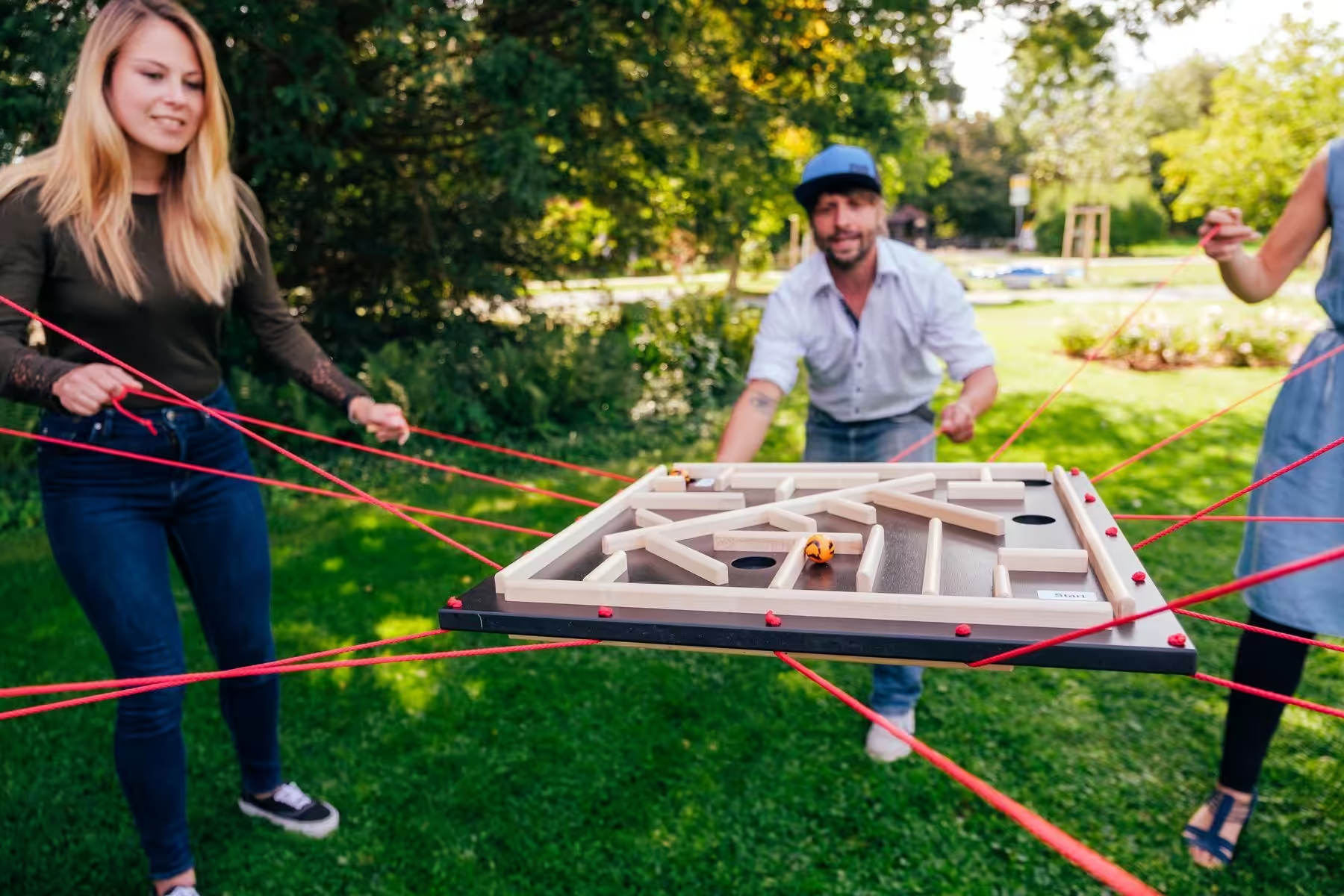
EOL is becoming increasingly important in adult education. The business world has also become aware of this modern learning philosophy. Many companies are now integrating experiential learning into their personnel development measures. There are several reasons for this step. Firstly, technical-productive changes and digitalization are leading to a change in the requirements profile of many employees in most sectors.
Conventional further training measures are no longer effective
Both the degree of abstraction and the complexity of professional activities are increasing. As a result, many work tasks require more or new knowledge. On the other hand, the trend is increasingly moving towards process-oriented work. As a result, the technical and content-related requirements are increasing. At the same time, more and more social and personal skills are required. Conventional qualification concepts and further training measures are no longer effective here, as they focus on different content. Whether team building or company events with a training character - experience-oriented learning with active actions and fun, on the other hand, will bring your employees to a higher level of knowledge more quickly and sustainably.
Successful personnel development on a neuroscientific basis
As a specialist in team building and corporate events, we have been successful for years with our personnel development services. For example, the North Rhine-Westphalian Ministry of the Interior recently extended its cooperation with Teamio Event GmbH until 2021 with regard to the organization of specific personnel development measures and team building events.
In view of the latest neuroscientific findings, the teamio crew has integrated experiential learning into its portfolio of offers and tasks. With a corresponding company event or team-building measure, you can optimize the transfer of knowledge compared to standard seminars.
Corporate events and team building: you also benefit from the emotions generated
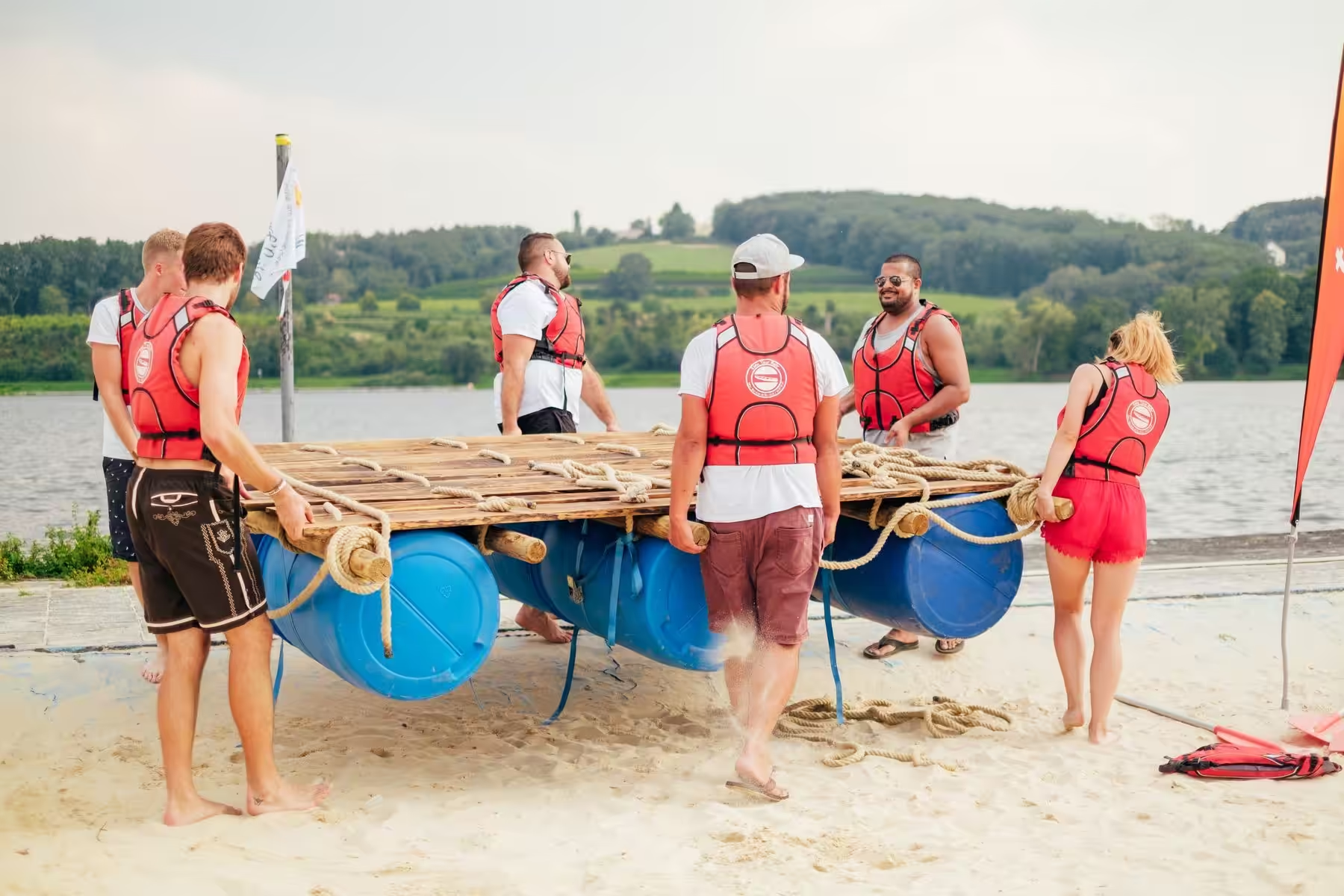
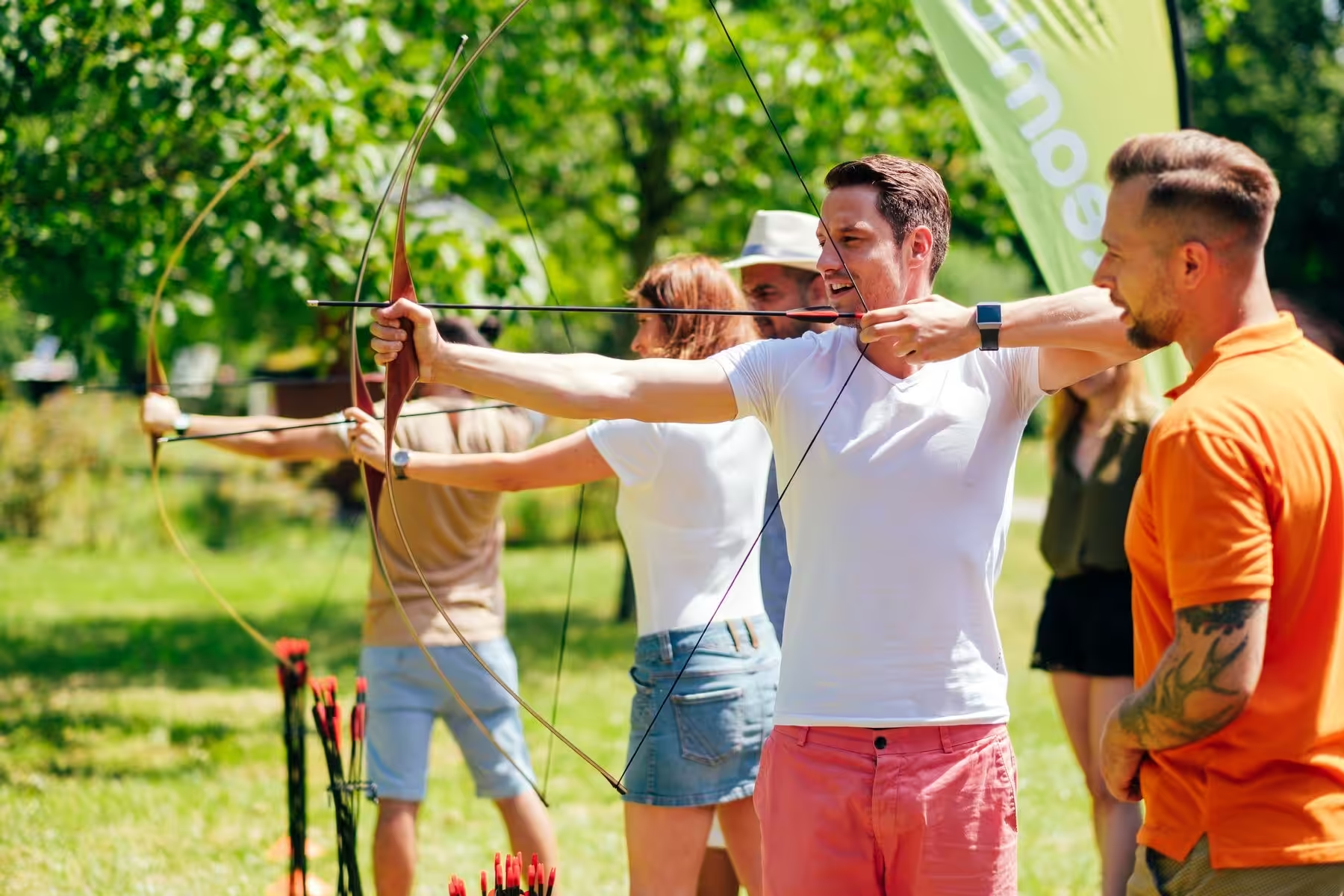
Your employees work together to develop solutions within the framework of various planning scenarios. Solving tasks and achieving goals in or through the community generates positive experiences for each individual participant. According to neuroscientific findings, positive experiences in combination with one's own emotions generated by the experience are two key factors for successful learning and sustainable knowledge transfer.
At a company event of this kind, all participants are involved both mentally and physically as well as emotionally. The emotionality generated intensifies the learning effect and the willingness to embrace change. This makes it easier for company employees to meet the new requirements.
Optimize personnel development in your company
In these global digital times, future-oriented companies need employees who can adapt to changing requirements quickly and without major loss of productivity. To achieve this, forms of learning must be used that offer learners opportunities to absorb new knowledge in a sustainable way compared to traditional teaching methods. In this respect, experiential learning represents a multi-value solution that both improves and simplifies learning and knowledge transfer. A targeted team building or other team event can lay the decisive foundation for this.