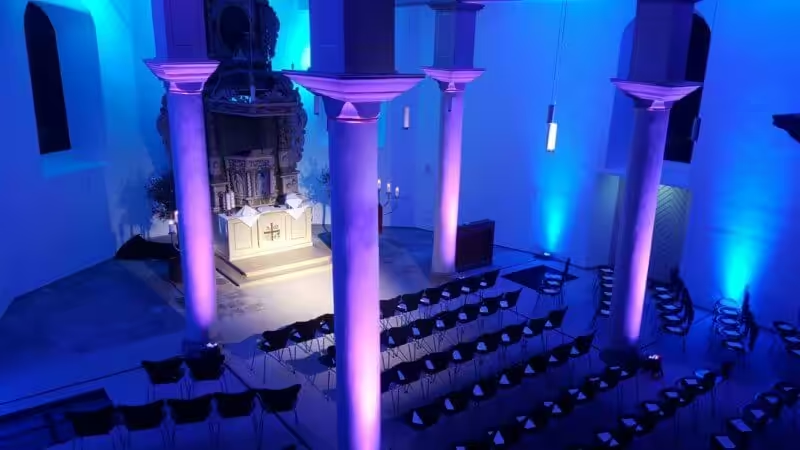
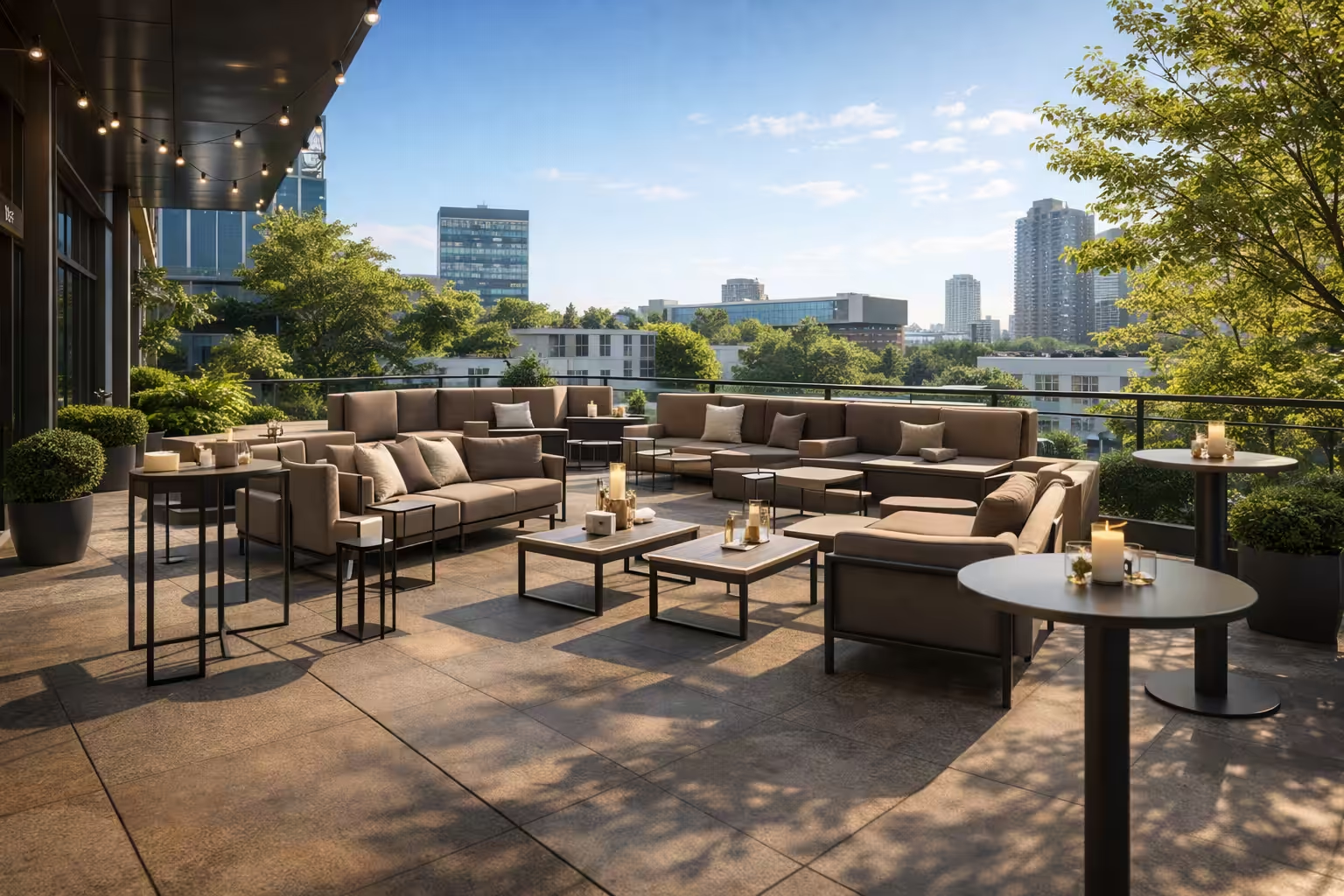
Are you currently planning your next summer party or an important conference and feeling overwhelmed by all the venue options? Many event planners know the feeling: the photos on the website look fantastic, but the reality on site is a letdown. To ensure your 2026 event is a complete success and to help you avoid unpleasant surprises, we’ve put together the ultimate checklist for your venue tour.
Choosing the right venue is often half the battle when it comes to a successful event. But appearances can be deceiving. While the venue may look impressive at first glance, the pitfalls usually lie in the details—whether it’s the technical infrastructure, hidden costs, or inflexible cancellation policies. Especially during the current peak season for planning spring and summer events, it’s crucial to ask the right questions before signing the contract.
In this article, you'll learn what key issues you need to address to ensure planning certainty and make a lasting impression on your team.
1. What is the status of the technical infrastructure and acoustics?
One factor that is often underestimated but plays a key role in setting the mood is room acoustics. Studies show that poor acoustics in a room can significantly increase stress levels and reduce the ability to concentrate. Nothing is more tiring for your guests than a room with echoes, where conversation becomes a struggle.
Ask specific questions:
- Are sound and lighting equipment included in the rental price, or are they provided exclusively by a specific service provider?
- What is the Wi-Fi bandwidth (especially important for hybrid devices)?
- Are there noise restrictions for outdoor areas after 10 p.m.?
2. What bad-weather options are actually available?
The summer of 2026 is sure to be sunny—but you shouldn’t count on it. A beautiful terrace is of little use if 100 guests have to take shelter in a cramped hallway during a sudden thunderstorm.
Therefore, please clarify:
- Is there a suitable private room reserved exclusively for you?
- Are there any tents or shelters available that can be set up quickly?
- How quickly can the catering be moved from outside to inside?
teamio Expert Tip:
Never plan for the “best-case scenario” alone. We often find that venues offer “bad-weather options” that, in reality, amount to nothing more than a dark basement room. Be sure to ask to see the alternative!
3. How flexible is the catering?
Culinary experiences are emotional. But rigid set menus are a thing of the past. The trend is clearly moving toward regional, sustainable, and inclusive offerings. According to a WWF study, a meat-based dish generates significantly more greenhouse gases than a vegetarian alternative. Modern catering must address this issue.
Check it out:
- Are we required to use a specific caterer, or can we bring in outside vendors (e.g., food trucks)?
- How are dietary requirements (vegan, gluten-free, halal) handled?
- Are leftovers repurposed (e.g., through partnerships like “Too Good To Go”)?
4. Is the venue truly accessible?
Inclusion isn’t just a “nice-to-have”—it’s a must for modern corporate culture. Unfortunately, “accessible” often just means there’s a ramp somewhere.
Check carefully:
- Are there accessible restrooms on the same floor?
- Are all event areas (including the stage and the garden) accessible without steps?
- Are there parking spaces for people with disabilities in the immediate vicinity?
5. What hidden costs can we expect?
The budget is often the biggest point of contention. Quotes may seem affordable at first glance, until the final bill arrives. The Association for Media and Event Technology (VPLT) regularly points out rising labor costs, which are often billed on an hourly basis rather than as a flat rate.
Ask about the fine print:
- Are cleaning, electricity, and water included in the flat rate?
- Are there night shift premiums for service staff?
- Do we have to pay extra to use the existing furniture?
- How much are the GEMA fees if we don't have live music, but only background music playing? (The GEMA fee calculator is often helpful here).
6. How sustainable is the venue?
Starting in 2026, sustainability will become a mandatory reporting requirement for many companies (CSRD). Your event venue contributes to your carbon footprint. A study by the Federal Ministry for the Environment (BMUV) defines sustainable events as those that take environmental, social, and economic aspects into account in equal measure.
Key indicators:
- Does the venue use green electricity?
- Is there a waste reduction plan (reusable instead of disposable)?
- Is it realistic for guests to travel here by public transportation?
7. What are the cancellation policies in detail?
The past few years have taught us that flexibility is worth its weight in gold. Standard contracts often stipulate high cancellation fees months in advance.
Negotiate:
- Until when can we cancel or reschedule for free?
- Are there special provisions for force majeure or pandemics?
- Can we still reduce the number of participants at short notice (e.g., up to 48 hours in advance)?
8. Are there any concurrent events?
Nothing disrupts a focused conference more than a loud wedding in the next room. The exclusivity of the space is a key factor in creating a comfortable atmosphere.
Please clarify:
- Are there any other events happening at the same time?
- If so, how is acoustic and spatial separation ensured?
- Do we share the restrooms, the coat check, or the outdoor area with other groups?
9. Does the atmosphere fit our event’s purpose?
Our surroundings influence our thinking. Research on “enacted cognition” suggests that our physical environment directly influences our cognitive processes. A creative workshop held in a sterile conference room will generate fewer ideas than one held in an inspiring environment.
Think about it:
- Does the space support the objective (e.g., team-building vs. strategy meeting)?
- Can the room be darkened (for presentations) or flooded with natural light (to save energy)?
- Is there enough room for interactive activities like team-building exercises?
10. How easy is it to get there, and what is the parking situation like?
First impressions are made the moment guests arrive. If your guests have to spend 20 minutes looking for a parking spot, their mood will be in the dumps even before you’ve had a chance to greet them.
Check out:
- How many parking spaces are available right at the venue?
- Is there a charge for these?
- How far is it on foot from the nearest train station or bus stop?
Bottom line: It costs nothing to ask—but wrong answers do
Thorough preparation and asking the tough questions will help you avoid budget overruns and organizational chaos. Use this checklist for your next site inspection. Once the groundwork is in place, you can focus entirely on what really matters: creating an unforgettable experience for your team.
Do you have the perfect venue but no idea what to do for the entertainment? Whether it’s a cool industrial warehouse, a castle, or right on your company grounds—we’ll bring any space to life. Discover our creative event formats for your next gathering and let’s plan it together!